

In this topic, we examine human demographics – how human populations change over time and with respect to factors such as wealth, health and education.
We also explore how urban areas – the world’s cities – can be sustainably designed to meet the needs of current generation without jeopardizing future generations’ ability to meet their own needs.
We will evaluate three different tiers of strategies for managing urban air pollution – changing human behavior to stop the production of air pollutants altogether; reducing the output of pollutants to less harmful levels; and cleaning up or restoring the airspace in urban areas.
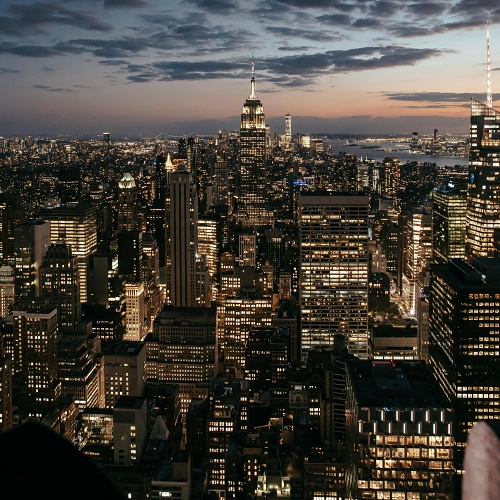
You can find resources for each subtopic by following the links below.
8.1 Human populations
- How can the dynamics of human populations be measured and compared?
- To what extent can the future growth of the human population be accurately predicted?
- Click here for a flashcard set that covers the combined SL and HL content for ESS topic 8.1.
8.2 Urban systems and urban planning
- To what extent are urban systems similar to natural ecosystems?
- How can re-imagining urban systems create a more sustainable future?
- Click here for a flashcard set that covers the combined SL and HL content for ESS topic 8.2.
8.3 Urban air pollution
- How can urban air pollution be effectively managed?
- Click here for a flashcard set that covers the combined SL and HL content for ESS topic 8.3.

Click here for a flashcard set that covers the HL only content for ESS topics 8.1, 8.2, and 8.3. This is in addition to the SL content in all three topics.
Happy learning!
 MrKremerScience.com
You must be logged in to post a comment.