

Guiding questions
- How can diversity be explained and quantified, and why is this important?
- How does the unsustainable use of natural resources impact biodiversity?

You can find my student workbook for IB ESS topic 3.1 Biodiversity and evolution here, including an answer key.
Here’s a set of IB ESS flashcards for topic 3.1 Biodiversity and evolution.
SL and HL knowledge statements
3.1.1 Biodiversity is the total diversity of living systems and it exists at several levels.
3.1.2 The components of diversity contribute to the resilience of ecological systems.
3.1.3 Biodiversity arises from evolutionary processes.
3.1.4 Natural selection is the mechanism driving evolutionary change.
3.1.5 Evolution by natural selection involves variation, overproduction, competition for limited resources, and differences in adaptation that affect rates of survival and reproduction.
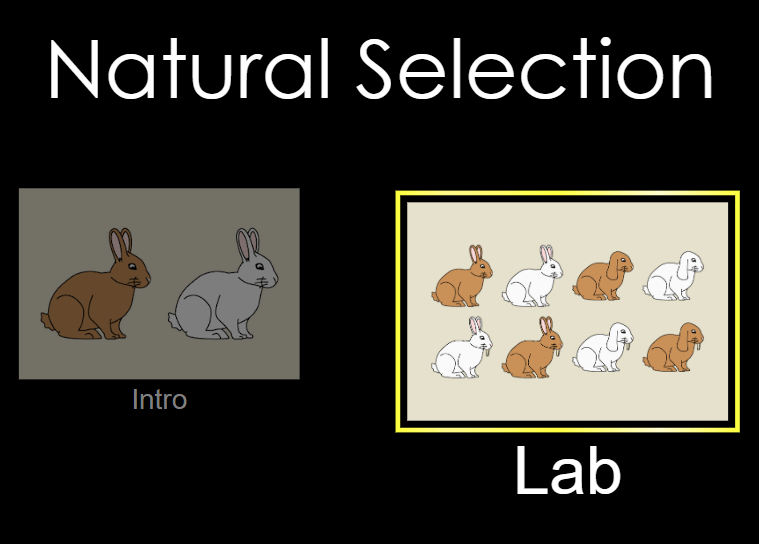
3.1.6 Speciation is the generation of new species through evolution.
3.1.7 Species diversity in communities is a product of richness and evenness.
3.1.8 Simpson’s reciprocal index is used to provide a quantitative measure of species diversity, allowing different ecosystems to be compared and for change in a specific ecosystem over time to be monitored.
3.1.9 Knowledge of global and regional biodiversity is needed for the development of effective management strategies to conserve biodiversity.
Knowledge statements for HL only
3.1.10 Mutation and sexual reproduction increase genetic diversity.
3.1.11 Reproductive isolation can be achieved by geographical separation or, for populations living in the same area, by ecological or behavioural differences.
3.1.12 Biodiversity is spread unevenly across the planet, and certain areas contain a particularly large proportion of species, especially species that are rare and endangered.

What are biodiversity hotspots?
Learn about some biodiversity hotspots around the world from Conservation International.
3.1.13 Human activities have impacted the selective forces acting on species within ecosystems, resulting in evolutionary change in these species.
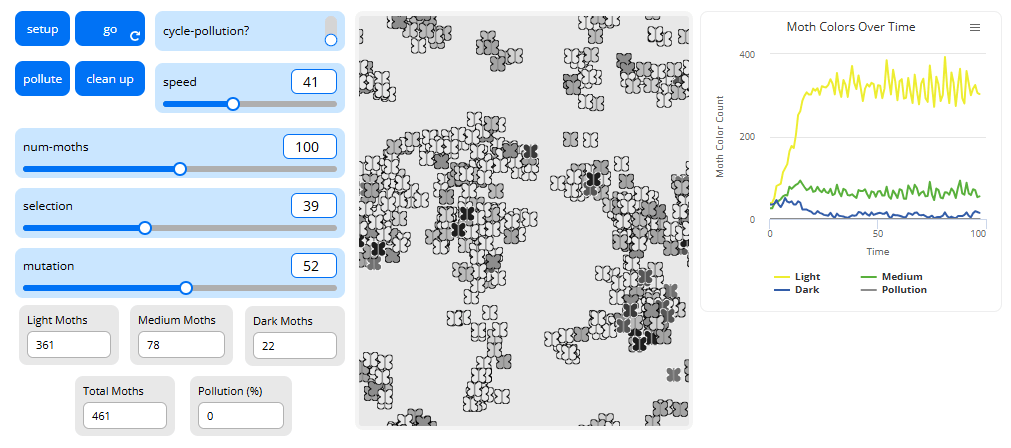
3.1.14 Artificial selection reduces genetic diversity and, consequently, species resilience.
3.1.15 Earth history extends over a period of 4.5 billion years. Processes that occur over an extended timescale have led to the evolution of life on Earth.
3.1.16 Earth history is divided up into geological epochs according to the fossil record.
3.1.17 Mass extinctions are followed by rapid rates of speciation due to increased niche availability.
3.1.18 The Anthropocene is a proposed geological epoch characterized by rapid environmental change and species extinction due to human activity.
3.1.19 Human impacts are having a planetary effect, which will be detectable in the geological record.
Practical activities
- Practical 3.1.7 – Identify local flora and fauna using dichotomous keys
- Compare species richness or species evenness in different ecosystems
- Practical 3.1.8 – Calculate Simpson’s reciprocal index for different locations
- Practical 3.1.13 – Measure human impacts on selective pressure in insect populations

Biodiversity investigations are a great way to learn about environmental science! I wrote a pocket-sized field notebook for students to use during fieldwork for the ESS Internal Assessment or other outdoors investigations. You can find it here at Amazon.
Possible engagement opportunities
- Investigate the origin and increase in abundance of tuskless elephants in regions undergoing civil conflict.
- Investigate the impact of inequality on knowledge of biodiversity.
- Citizen science and voluntary agencies offer opportunities for students to participate in gathering knowledge of local and regional biodiversity.
- Create a podcast exploring the epoch of the Anthropocene.
Happy learning!
You must be logged in to post a comment.